
Lyon Township Previous Residents Sources
A search for past residents works best as a layered effort. Start with the current parcel and its legal description. Then work backward through recorded transfers, one deed at a time. A city directory or newspaper helps when the real question is who lived at the address in a given year. Lyon Township poses one practical wrinkle. The online deed-copy boundary, the local newspaper run, and the historical-map list each cover different eras, so write down the source and date behind every name you collect.
| Source | Years Available | Where Held | What It Can Show |
|---|---|---|---|
| Oakland Super Index | 1964 forward, except subdivision plats | Oakland County Register of Deeds | Deed parties, recording dates, document details, and legal descriptions |
| Federal census | 1830-1950 for the usable Lyon research trail | NARA and research partners | Household evidence, with Lyon entries not listed for 1890 |
| South Lyon Herald | 1929-1945 | CMU Clarke Historical Library digitization | Notices, addresses, local events, obituaries, and land references |
| Directory collections | Exact Lyon and South Lyon runs need confirmation | Library of Michigan and OCPHS | Street, surname, telephone, and household clues by publication year |
| Historical maps | Selected years from 1857 through 1990 | History Oakland County | Road, subdivision, and parcel context for an older address |
Match the record to the question first. Deeds answer who owned the land. Directories, census schedules, and newspapers answer who lived in the household. The Register of Deeds publishes no documented coverage list online. No list covers its older images and books either. Treat that gap as an access question. Raise it with the custodian or an archive. Do not treat it as proof that no earlier record exists.
Lyon Township Past Residents by PIN
Oakland County Property Gateway anchors any address-based trail in Lyon Township. Its public instructions support a lookup by street address or by a 10-digit PIN. The PIN goes by other names too. People call it a parcel number, a parcel ID, or a Sidwell number. The map pinpoints the municipality. It also opens the way to parcel data, tax information, aerials, and map reports. Before you jump to another record system, save the PIN, situs address, legal description, and any transfer information. Keep the subdivision or lot wording as well.
| Property Gateway field | How it works |
|---|---|
| Street Address or PIN | Required text value, at least five characters; partial address or PIN searching is documented. |
| PIN format | Ten digits, commonly shown as xx-xx-xxx-xxx; dashes are optional and no CVT code is used. |
| Municipality | Identified automatically by the portal. No municipal selector is documented. |
| Map mode | Optional Standard, Detailed, or Hybrid view for the returned parcel. |
| Owner-name search | Not documented in the public FAQ. Use the verified address-first route. |
Keep a few terms straight here. A situs address is the physical location of the parcel. A tax mailing address is where owner correspondence goes, which may sit somewhere else entirely. The legal description is the recorded land language. It is often a lot and block or a metes-and-bounds description. When an old record omits a street number, or a road label has shifted over the years, that description is the sturdier bridge between systems. One caution applies throughout. An owner or mailing recipient is not automatically proof of every occupant.
- PIN
- A county parcel identifier used to connect the map, assessment material, deeds, and plats. Oakland County displays it in a 10-digit pattern and accepts it with or without dashes.
- Situs address
- The physical location of the parcel on the map. It is different from an owner's tax mailing address.
- Legal description
- The recorded description of the land. It can preserve the key to a property when an old deed uses no familiar street address.
Note: A Lyon Township mailing label or ZIP can differ from the parcel's true municipal location, so confirm the map result before carrying an address into older records.
A quick PIN check settles the question. Match the parcel number to the map first, then trace it back through the residents directory.
Lyon Township Previous Residents After 1964
Deeds recorded from January 1, 1964 onward are searchable through the Oakland County Super Index. Guest searching is free. Subdivision plat maps are the one exception. The simple search form takes a name, an address, or a PIN. Index searching costs nothing. Pulling images and document details goes through a cart and payment flow, per the Register of Deeds. Brand-new recordings show up by date or document number first. Sometimes party names and legal descriptions finish indexing later. A very recent transfer may look missing when it is simply not fully indexed yet. It pays to retry.
| Result detail | Why it matters to a backward trail |
|---|---|
| Document number and recording date | Anchor the transfer to a particular instrument and time. |
| Grantor and grantee | Identify the outgoing and incoming parties for the next role-reversed search. |
| Liber/Page and document type | Distinguish the recorded reference and the type of transaction. |
| Legal description | Check that the result concerns the same parcel despite a different street label. |
| Index status and thumbnail | Show whether indexing is complete and whether an image route is available. |
The Super Index search screen is the source of this Oakland County deed-index image.
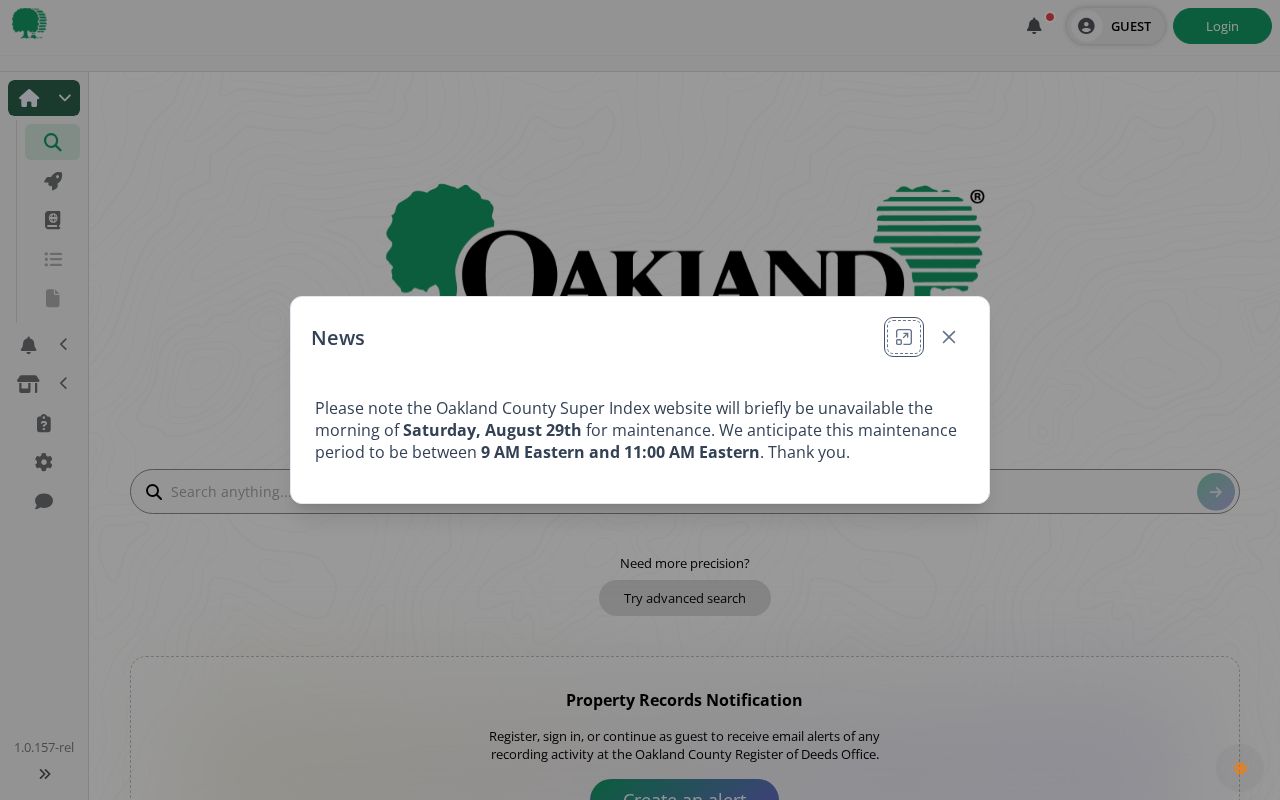
Write down the document number, recording date, document type, and party roles. Capture the Liber/Page where it appears, the legal description, and the index status too. Do this before paying for an image. Those fields let the next Lyon Township lookup be checked against the same parcel. A name alone will not do it. Deeds before 1964 have no established online run here. So no cutoff date should be invented for older records.
Oakland Deed Chain for Past Residents
A deed chain works well for tracing past residents. It starts with the people tied to a transfer, then opens doors into household sources. Begin with current parcel data. Skip the surname guess. In the index, the buyer is the grantee and the seller is the grantor. Each earlier owner flips roles on the transaction before it. That is why a backward chain moves from today's grantee toward each earlier grantor in turn.
- Search the Property Gateway address and copy the PIN and legal description.
- Find the current owner's acquisition in Super Index, confirming the recording date, document number, and land description.
- Read the seller as grantor and search for that party's earlier purchase as a grantee.
- Repeat the role change for each confirmed transfer, keeping a dated note of the source and document number.
- When the online copy boundary or a plat exception intervenes, ask the Register of Deeds or an archival repository for the appropriate older-record route.
- Grantor
- The person or entity transferring an interest in land, commonly the seller on a deed.
- Grantee
- The person or entity receiving that interest, commonly the buyer on a deed.
- Chain of title
- A sequence of recorded transfers tied to the same land, checked through dates, parties, and the legal description.
Deeds in Oakland County sometimes name trusts, estates, and companies instead of individuals. A parcel's chain of title can still yield clues. A tax mailing address, an obituary, a probate file, or a later deed may add context to a past residents search. An old deed alone, however, cannot tell you where a living person resides now.
Lyon Township Previous Residents and Maps
Maps help when a street directory or resident lookup stops moving backward. History Oakland County's Lyon material lists plat and map years from 1857 through 1990. The set includes 1872, 1896, 1908, 1930, 1947, 1960, 1964, 1966, 1970, 1973, 1975, 1977, 1979. It also includes 1990. Comparing editions can show when a rural road changed. It can also show subdivision or parcel pattern changes in Lyon Township. That context helps before repeating a past residents search on an old address.
A plat is the most useful tool for lot and block geometry. Oakland County's documented route runs through General Search, then PLAT Records. It continues through Additional Criteria, County, and Subdivision Name. The route ends at the record information or attachment. A plat explains shared boundaries and subdivision names. It does not identify current occupants. Match the legal description on a deed to the plat. Then treat the result as land context rather than a household list.
Note: Pair map and plat labels with a dated deed, directory, or census record before naming any Lyon Township household.
Past Lyon Township Households in Directories
Ownership answers only part of a past-residents question. Directories tell you who actually lived at the number. The Library of Michigan notes that city directories can be searched by surname, street, or telephone number. Street pages usually list residents and businesses in house-number order. That layout makes a reverse or criss-cross search practical. Start at the number. Scan both sides. Allow for abbreviated road names and OCR errors that garble an address. Library catalogs list no dedicated Lyon Township or South Lyon directory runs. A staff member should confirm any volume before you rely on it.
For household history, match the directory year to the nearest federal census. Then check the address against the deed chain. The Lyon Township Directory Book lays out the collection routes in more detail. Federal census access reaches 1950. History Oakland County lists Lyon entries for many years. Coverage runs through 1830, 1840, 1850, 1860, 1870, 1880, 1900, 1910, 1920, 1930, and 1940. The 1890 count is missing. That era needs deeds, newspapers, tax rolls, and directories together.
- Write down the directory's year, publisher, street spelling, and house number.
- Compare that entry with the nearest available census, without treating either source as complete for every resident.
- Check a deed or parcel key to be sure the same address was attached to the same land at that time.
- Use an obituary, probate record, or newspaper notice only as a dated lead that can be verified against the record custodian.
Lyon Township Previous Residents in Herald
For tracing past residents of Lyon Township, few records beat old newspapers. Central Michigan University's Clarke Historical Library hosts a Herald archive online. It holds 878 issues of the South Lyon Herald. The issues span January 31, 1929 through December 27, 1945. The paper is a goldmine for a residents directory project. Obituaries and legal notices sit side by side. So do funeral accounts, business items, land references, and social columns. Pair a surname with a street or community name when you search. Then open the page image itself. OCR often mangles names and house numbers. Your eyes are the better tool. A single Herald item can tie a deed transfer to the household behind it.
Image credit: the CMU newspaper-digitization page, which hosts the South Lyon Herald archive.
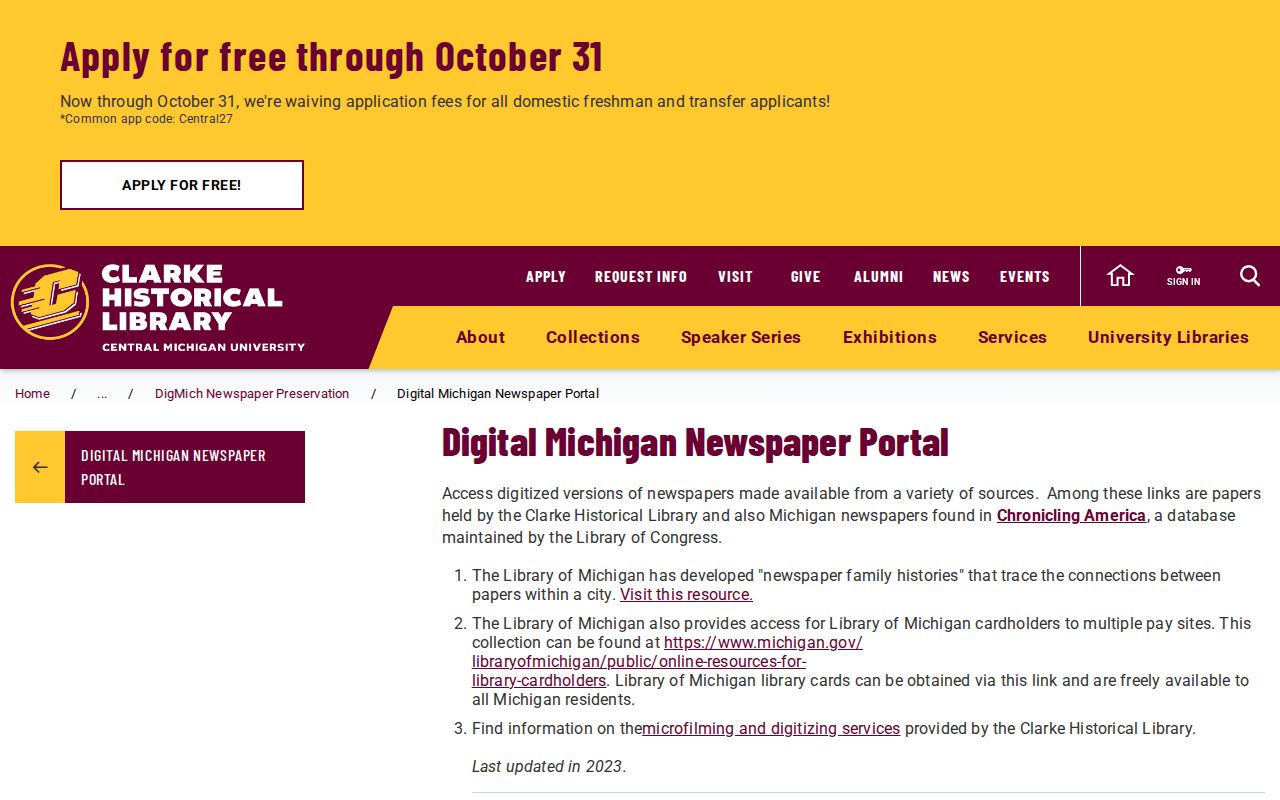
A notice is a lead, not a deed substitute. Match its date, street reference, and names to the parcel or documentary trail. The Herald's 1929-1945 coverage is precise. A different newspaper title or year needs confirmation through the library's licensed resources or a local-history referral.
Lyon Township Previous Residents at OCPHS
The Oakland County Pioneer and Historical Society offers a deeper local route when a title chain or newspaper leaves questions open. Its small-manuscripts list identifies two Lyon folders: Lyon Township History, folder 03066, and Lyon Township/New Hudson, folder 03067. Nearby folders 03068 through 03070 and 031 hold other Lyon material. That material includes an 1839 justice judgment and a copied 1827 Oakland County Probate Court Mack estate matter. Family trees and photographs appear there too. These are archival leads. No folder promises a searchable address list.
OCPHS notes address directories from 1860 forward. Which Lyon volumes it holds is unclear. Contact the archive before travel and request the specific municipality, years, and folder references. Its material can give historical context for a surname or property, but a recorded deed, census, or official probate file remains the stronger evidence for a transaction or household date.
Lyon Township Previous Residents Limits
Some gaps are real. The online Super Index copy coverage starts in 1964. It also excludes subdivision plats. The county publishes no clear route to older deeds, and library catalogs show no dedicated Lyon directory runs. A blank search may reflect a legal description rather than a street address, incomplete recent indexing, an archived collection, a protected record, or a different jurisdiction. Statewide vital records and local archives help only when their own access rules and collections fit the question.
Lawful use. Lyon Township previous-residents research belongs to family history, estate and heir questions, and house history. Do not use an old record to track, harass, intimidate, or harm any living person.
Michigan's Address Confidentiality Program shields qualifying participants behind a designated address and withholding rules. Do not try to reverse a protected person from a missing voter or property record. An absent name is a boundary, not a puzzle. Respect it.